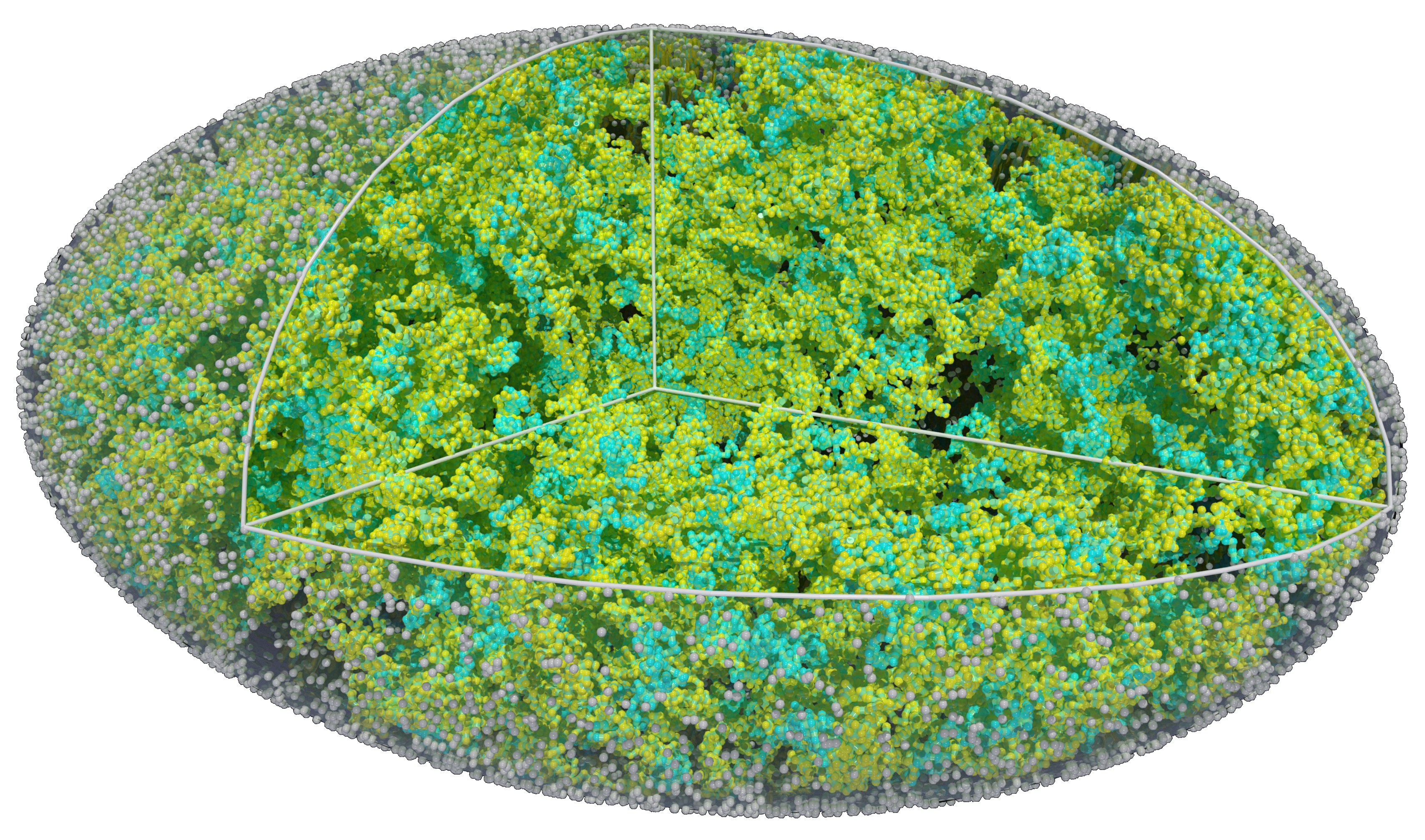
aLENS (a Living Ensemble Simulator) is a powerful simulation framework for studying the cytoskeleton — a dynamic network of polymer filaments, molecular motors, and other crosslinking proteins that drive essential biological processes in cells. It excels at modeling large-scale cytoskeletal assemblies, helping researchers explore how motor proteins, thermal fluctuations, mechanical stresses, and spatial confinement shape system behavior.

aLENS is a hybrid Brownian Dynamics / kinetic Monte Carlo simulation of

  • Rigid rods and spheres
  • Coupled collision-spring dynamics with steric interactions enforced by a complementarity-based method
  • Thermodynamically accurate motor/crosslinker kinetics
  • Parallel computing for large systems with tens to hundreds of thousands of particles
Read more about aLENS here and get started on the GitHub.

MuNDy (Multibody Nonlocal Dynamics) is a C++ infrastructure for building scalable, biologically grounded microscale multibody dynamics software. It supports models with evolving mechanical and relational structure. Rather than a monolithic simulator, MuNDy builds upon Trilinos/STK's runtime-extensible entity/part/field data model to provide reusable abstractions and data structures for this problem class. It is designed for research software developers building domain-specific applications across deployment scales, from laptops and workstations to multi-GPU clusters.

MuNDy is a powerful backend for handling complex mechanical systems with

  • Heterogeneous rigid and flexible bodies
  • Constraints, motors, and contacts
  • Growth, division, death, and bonds that form, break, and reorganize
  • Long-range interactions mediated through a shared medium

Read more about MuNDy here and get started on the GitHub.

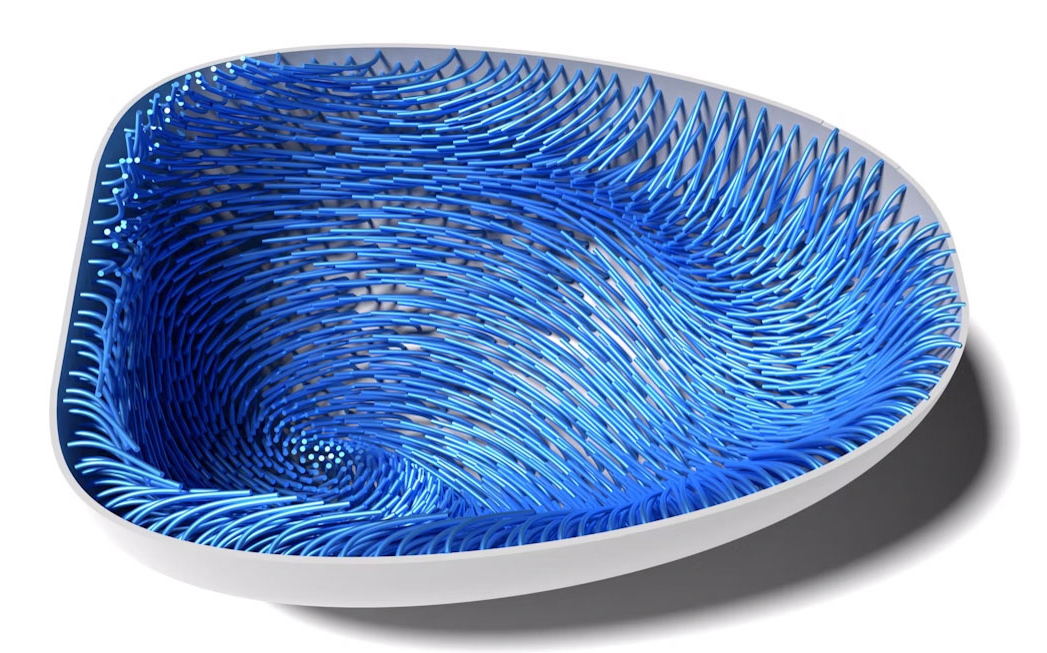
SkellySim (Cytoskeleton Simulator) is a high-performance application for simulating cellular components such as flexible filaments, motor proteins, and arbitrary rigid bodies immersed in fluid environments like the cytoplasm. It is designed to be highly scalable, capable of both OpenMP and MPI style parallelism, while using the efficient STKFMM/PVFMM libraries for hydrodynamic resolution.

Core Features:

  • Flexible filaments with slender body hydrodynamics, such as microtubules
  • Rigid bodies, such as organelles or microtubule organizing centers
  • Periphery, a smooth/convex containing volume, such as the cell boundary
  • Full hydrodynamic simulation of the above via a hybrid backward implicit/explicit Euler scheme

Read more about SkellySim here and get started on the GitHub.

PFI (Probability Flow Inference) is a framework for inferring gene-regulatory dynamics from time-stamped cross-sectional omics data, where cells are measured destructively and cannot be tracked individually. It is designed to infer the Fokker–Planck dynamics underlying the temporal evolution of the observed distributions.

  • Implements time-resolved denoising score matching to estimate the temporal evolution of the gradient of the log-density
  • Infers the drift term by fitting a phase-space probability flow consistent with the observed time-dependent marginals
  • Supports inference of a growth term to handle unbalanced distributions across time points coming from cell death and division
  • Includes both neural-ODE-based and flow-matching-based formulations
  • Provides application examples, including inference of hematopoietic stem-cell differentiation dynamics

Read more about PFI here and get started on the GitHub.